
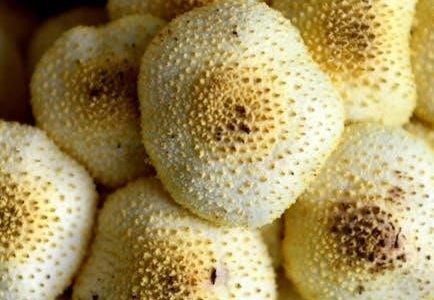
Colorado Mushroom Guide: An Overview
Colorado’s diverse landscapes – mountains, forests, plains, and plateaus – support a remarkable variety of fungal life, offering exciting opportunities for mushroom enthusiasts.
Colorado mycology is a fascinating field, deeply intertwined with the state’s varied ecosystems. From the towering peaks of the Rocky Mountains to the arid expanses of the Colorado Plateau, fungi play a crucial role in nutrient cycling and forest health. The Centennial State boasts a surprisingly rich diversity of mushroom species, attracting both seasoned mycologists and curious beginners.
Understanding the unique environmental factors – altitude, precipitation, and forest types – is key to successful mushroom hunting in Colorado. This guide will provide a foundational understanding of identifying edible, poisonous, and medicinal mushrooms found within the state’s borders, emphasizing responsible foraging practices and conservation efforts.
Geographical Regions for Mushroom Hunting
Colorado’s diverse geography dictates the types of mushrooms found in each region. The state encompasses portions of the Southern Rocky Mountains, the Colorado Plateau, and the Great Plains, each presenting unique foraging opportunities. Elevation changes dramatically, influencing moisture levels and forest composition.
Successful mushroom hunting requires adapting to these regional differences. Higher elevations support distinct species compared to lower, drier areas. Understanding these variations is crucial for locating specific mushrooms and maximizing your foraging success throughout Colorado’s varied terrain.
Rocky Mountain Forests
Colorado’s Rocky Mountain forests, dominated by conifers like spruce, fir, and pine, are prime locations for mushroom hunting. These high-elevation ecosystems provide the cool, moist conditions favored by many edible and medicinal species. Look for mushrooms near decaying wood, under dense canopy cover, and along streamsides.
Common finds include boletes, chanterelles, and various Russula species. The specific species present will vary with elevation and forest type, so research is key. Remember responsible foraging practices to ensure sustainability within these delicate ecosystems.
Colorado Plateau & Mesa Habitats
The Colorado Plateau and mesa habitats present a drier, yet surprisingly diverse, environment for mushroom growth. Pinyon-juniper woodlands and canyon bottoms offer refuge from the arid conditions, supporting unique fungal communities. These areas often yield different species than the Rocky Mountains.
Expect to find mushrooms associated with juniper trees and after monsoon rains. Morels can sometimes be discovered following wildfires in these regions. Careful identification is crucial, as some desert species can resemble edible varieties. Always prioritize safety and accurate species recognition.
Great Plains Mushroom Varieties
Eastern Colorado’s Great Plains present a unique challenge for mushroom hunters due to the drier grasslands. However, following significant rainfall, a flush of species can emerge, particularly near cottonwood trees and along riverbanks. Expect to find grassland species adapted to these conditions.
Agaricus species (field mushrooms) are common, but require expert identification to avoid toxic look-alikes. Puffballs and some boletes may also appear. The key to success is timing – searching shortly after substantial precipitation is essential for finding these elusive fungi.
Mushroom Anatomy & Identification
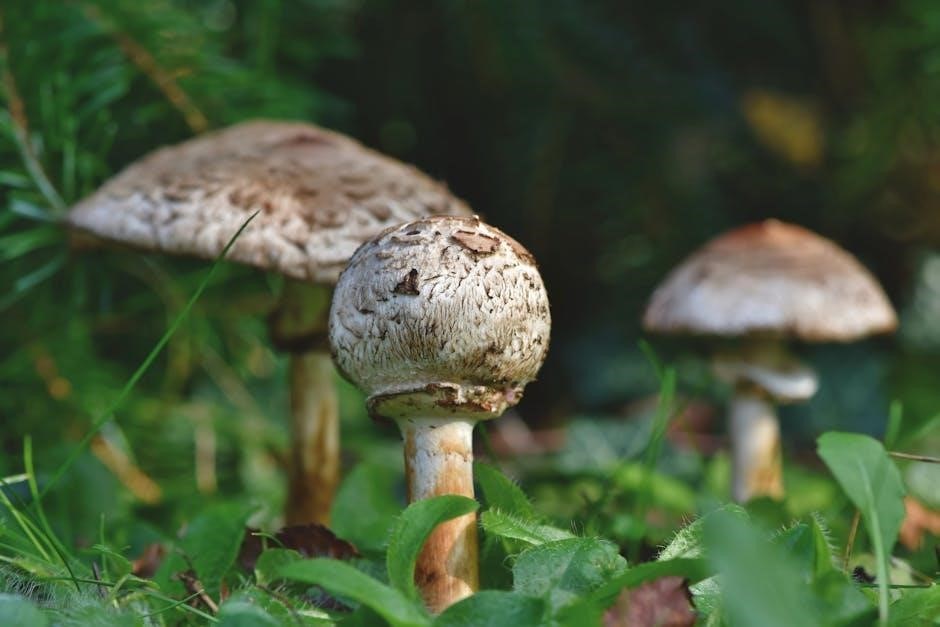
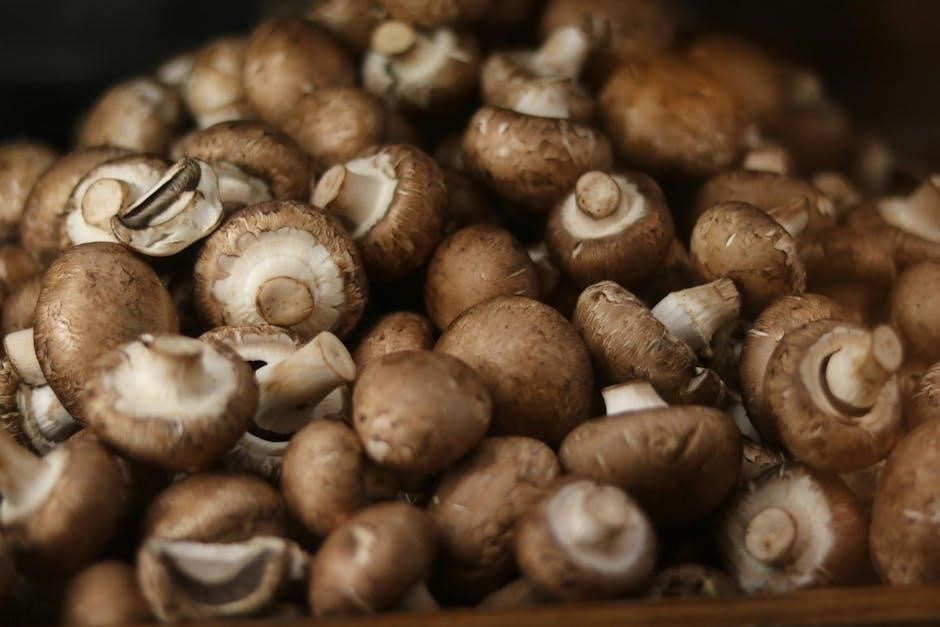
Understanding mushroom parts – cap, gills, stalk – is crucial for accurate identification, alongside spore prints and habitat knowledge, ensuring safe foraging practices.
Key Features for Identification
Successful mushroom identification hinges on observing several key characteristics. Begin with the cap – noting its shape (convex, flat, umbonate), color variations, and surface texture (smooth, scaly, sticky). Next, carefully examine the gill/pore arrangement underneath the cap; are they free, attached, or decurrent? Observe their color and spacing.
The stalk, or stipe, also provides vital clues. Note its length, thickness, color, and the presence or absence of a ring (annulus) or volva at the base. Finally, consider the mushroom’s habitat and any noticeable odor. Combining these observations is essential for accurate species determination.
Cap Morphology (Shape, Color, Texture)
The mushroom cap exhibits incredible diversity in shape, ranging from convex and hemispherical in young specimens to flat, umbonate (with a central bump), or even depressed with age. Coloration varies widely – from earthy browns and reds to vibrant yellows and whites – and can change with maturity or moisture levels.
Texture is equally important; caps can be smooth, dry, scaly, sticky, or even velvety. Observing these details, alongside the cap’s diameter, provides crucial initial clues for identification, helping narrow down potential species within Colorado’s diverse fungal landscape.
Gill/Pore Examination
Beneath the cap, identifying whether a mushroom possesses gills or pores is fundamental. Gills are thin, radiating structures, varying in color, attachment to the stalk (free, attached, decurrent), and spacing. Pore surfaces, found in boletes, consist of tiny tubes.
Gill color can change with maturity, and bruising reactions are significant. Pore color and the presence of staining upon touch are also key characteristics. Careful examination of these features, using a magnifying glass if needed, is vital for accurate species determination in Colorado’s varied habitats.
Stalk Characteristics (Presence of Ring/Volva)
The mushroom stalk, or stipe, exhibits crucial identifying features. Note its texture – smooth, scaly, fibrous – and color, which can vary. A ring, or annulus, is a remnant of the partial veil, often found on the stalk, indicating spore dispersal mechanisms.
More critically, examine the base for a volva, a cup-like structure representing the universal veil. The presence of a volva is a significant indicator of potentially deadly Amanita species. Careful observation of these stalk characteristics is essential for safe mushroom identification in Colorado.
Spore Prints: A Crucial Step
Creating a spore print is a fundamental technique in mushroom identification. Carefully remove the cap from a mature mushroom and place it, gills-down, on a contrasting surface – white paper for dark spores, and dark paper for light spores. Cover with a bowl or glass to maintain humidity.
After several hours, or overnight, lift the cap to reveal the spore deposit. Spore color is a key diagnostic feature, aiding in species determination. This seemingly simple step is invaluable for accurately identifying Colorado’s diverse fungal species.
Edible Mushrooms of Colorado
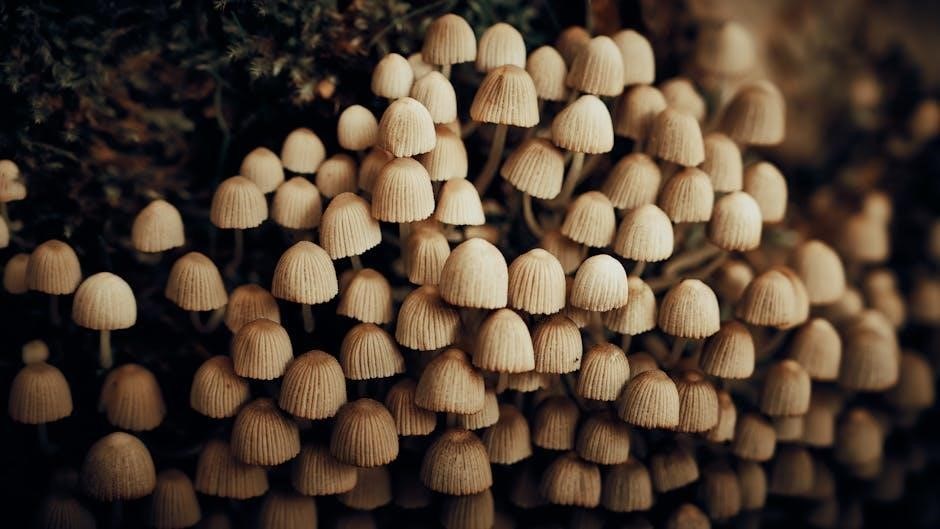
Colorado’s forests yield delicious edibles like morels, chanterelles, and porcini boletes, but positive identification is crucial before consumption for safety.
Morels (Morchella species)
Morels are highly prized edible mushrooms, eagerly sought after by foragers in Colorado each spring. Identifying morels requires attention to detail; they possess a distinctive honeycomb-like cap, fused directly to the stalk. Colors range from blonde to gray to nearly black, depending on the species and environment.
Morel hunting seasons typically align with warming soil temperatures and spring rainfall, generally from April through May, though elevation significantly impacts timing. Prime locations include recently burned areas, disturbed ground near deciduous trees (like ash and elm), and along river bottoms. Careful harvesting, leaving the base intact, promotes future growth.
Identifying Morels
Accurate morel identification is crucial, as false morels exist and can cause illness. True morels have a completely hollow stem when sliced lengthwise, and the cap is fully attached to the stem. The cap’s surface features a pitted, honeycomb-like appearance, not wrinkled or folded.
Color variations – blonde, gray, black – are normal within different morel species. Avoid mushrooms with a cottony or brain-like texture. Always cross-reference with reliable field guides and, if unsure, consult an experienced mycologist before consumption. Proper identification ensures a safe and rewarding foraging experience.
Morel Hunting Seasons & Locations
In Colorado, morel hunting typically begins in late April to early May at lower elevations, following spring rains and warming temperatures. Higher elevations yield morels later, often into June. Look for morels near deciduous trees like ash, elm, and cottonwood, especially after forest fires – burned areas are prime habitat.
Popular regions include the foothills west of Denver, the San Juan Mountains, and areas around the Colorado Plateau. Remember to obtain necessary permits and respect private property. Consistent moisture and soil temperatures above 50°F are key indicators for a successful hunt.
Chanterelles (Cantharellus species)
Chanterelles are prized edible mushrooms known for their fruity aroma and golden-yellow to orange color. Several Cantharellus species thrive in Colorado’s forests, including the Golden Chanterelle (Cantharellus cibarius) and White Chanterelle (Cantharellus subalbidus). They lack true gills, possessing forked, blunt ridges that run down the stem.
These mycorrhizal fungi form symbiotic relationships with tree roots, making sustainable harvesting crucial. Chanterelles are a delightful addition to culinary creations, offering a unique flavor profile. Careful identification is essential to avoid look-alikes.
Chanterelle Identification
Identifying chanterelles requires attention to detail. Look for a funnel or vase shape, with a smooth cap ranging from pale yellow to vibrant orange. Instead of true gills, they have forked, blunt ridges that are the same color as the cap. The stem is solid, tapering downwards, and also shares the cap’s coloration.
A distinct fruity or apricot-like aroma is a key characteristic. When bruised, chanterelles don’t typically stain. Be cautious of false chanterelles, which may have sharper gills or a different scent. Always cross-reference with reliable field guides.
Preferred Habitats for Chanterelles
Chanterelles in Colorado thrive in a symbiotic relationship with tree roots, particularly conifers like spruce, fir, and Douglas fir. They are commonly found in moist, old-growth forests with well-drained soil. Look for them near mossy areas and along stream banks, where humidity is consistently high.
Elevation plays a role, with chanterelles often appearing between 7,000 and 10,000 feet in the Rocky Mountains. They prefer disturbed areas, like logging roads or areas with recent forest fires, but responsible foraging is crucial.
Porcini/Boletes (Boletus species)
Boletes, including the prized Porcini, are a highly sought-after group of mushrooms in Colorado. They are characterized by their thick stalks and pores instead of gills. Several Boletus species exist, varying in color and subtle characteristics.
Identifying boletes requires careful attention to pore color, stalk patterns, and bruising reactions. These mushrooms form mycorrhizal relationships with conifers and deciduous trees, often appearing after summer rains. Experienced foragers value their nutty flavor and firm texture, making them excellent culinary additions.
Boletus Identification & Varieties
Accurate Boletus identification demands scrutiny of pore color – white, yellow, or reddish – and stalk features like netting. Key Colorado species include the King Bolete (Boletus edulis), known for its exceptional flavor, and various Leccinum species, often associated with specific trees.
Beware of look-alikes! Some boletes stain blue when cut, a helpful but not foolproof identifier. Others may have bitter tastes, indicating toxicity. Careful spore printing and comparison with reliable field guides are crucial for safe consumption. Variations exist based on habitat and tree association.
Boletus Habitat and Seasonality
Colorado’s Boletus mushrooms thrive in coniferous forests, particularly those dominated by spruce, fir, and ponderosa pine, at elevations ranging from 8,000 to 11,000 feet. They exhibit a mycorrhizal relationship, meaning they form a symbiotic connection with tree roots.
The peak season for Boletus fruiting typically extends from late summer through autumn – August to October – following periods of substantial rainfall. However, specific timing varies with elevation and yearly weather patterns. Scouting after moist spells increases your chances of a successful harvest.
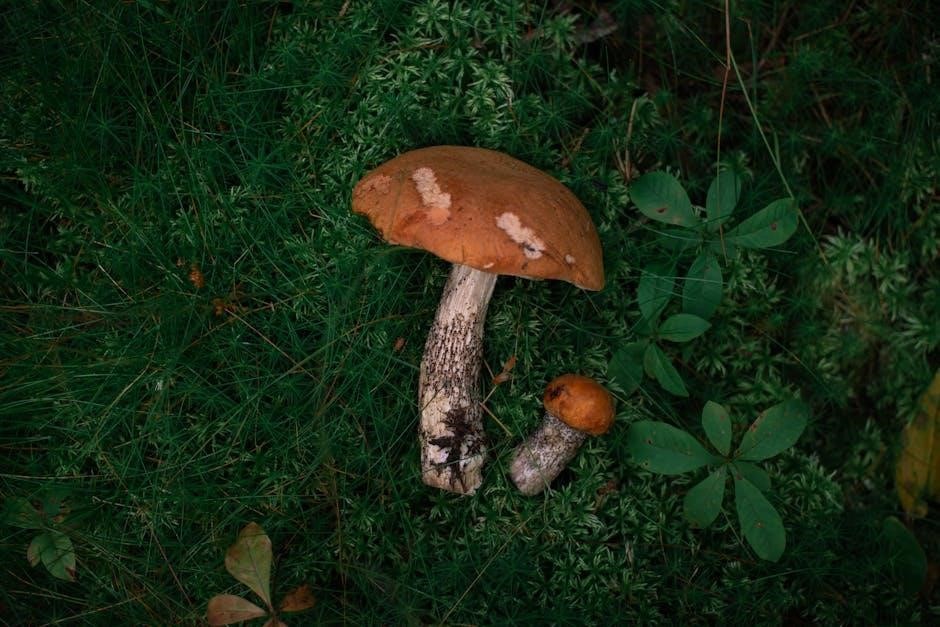
Poisonous Mushrooms of Colorado
Colorado harbors several dangerously toxic mushrooms, including the Death Cap and Destroying Angel, demanding extreme caution and precise identification skills from foragers.
Death Cap (Amanita phalloides)
The Death Cap, Amanita phalloides, is one of the most poisonous mushrooms globally, and poses a significant risk in Colorado. Its pale greenish-yellow cap and white gills belie its deadly nature. This fungus contains amatoxins, which cause severe liver and kidney damage, often leading to fatality.
Identifying features include a volva (sac-like structure at the base of the stalk) and a ring on the stalk. It’s often found near oak trees, and fruiting occurs in late summer and fall. Mistaking it for edible species is a serious concern, highlighting the need for expert knowledge. Consumption, even in small amounts, can be lethal, requiring immediate medical attention.
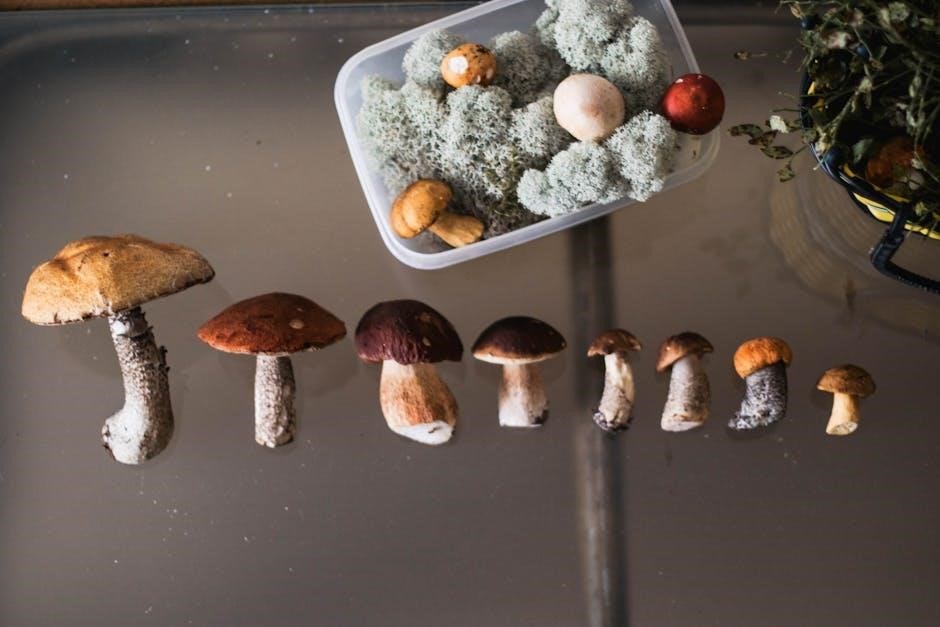
Death Cap Identification & Toxicity
Accurate identification of Amanita phalloides is crucial, as it resembles some edible mushrooms. Key features include a greenish-yellow cap, white gills, a ring on the stalk, and a prominent volva at the base. However, these characteristics can vary. Toxicity stems from amatoxins, potent liver and kidney poisons.
Symptoms appear 6-24 hours post-ingestion, starting with gastrointestinal distress, followed by a deceptive period of recovery before organ failure sets in. There is no antidote; treatment focuses on supportive care. Even a small portion can be fatal, making avoidance paramount. Expert confirmation is vital before consuming any wild mushroom.
Locations & Risks in Colorado
Death Caps are increasingly found along the Front Range, particularly in urban and suburban areas where they often associate with ornamental trees like oaks and pines. Reports indicate their presence in Denver, Boulder, and Fort Collins, expanding their range. Moist conditions following rainfall favor their growth.
The risk is heightened by misidentification, especially for novice mushroom hunters. Pets are also vulnerable, ingesting mushrooms in gardens or parks. Always exercise extreme caution, and never consume a mushroom unless positively identified by an expert. Report any suspected sightings to local mycological societies to aid in tracking their spread.
Destroying Angel (Amanita virosa)
The Destroying Angel, a deadly Amanita species, presents a significant danger due to its deceptively innocent appearance. It’s characterized by a pure white cap, gills, and stalk, often lacking any strong odor. Its smooth cap can range in size, and a volva (sac-like structure at the base) is usually present, though sometimes buried.
This mushroom contains amatoxins, causing severe liver and kidney damage, often fatal. Confusion arises because young Destroying Angels can resemble edible puffballs or other white mushrooms. Extreme caution is vital; positive identification requires expert knowledge and should never be attempted without it.
Destroying Angel Identification
Accurate identification of Amanita virosa is crucial, demanding meticulous attention to detail. Look for a pristine white cap, typically 3-6 inches across, smooth and often slightly bulbous. The gills are always white, free from the stalk, and closely spaced. A prominent volva, a cup-like structure at the base, is a key feature, though it may be partially hidden.
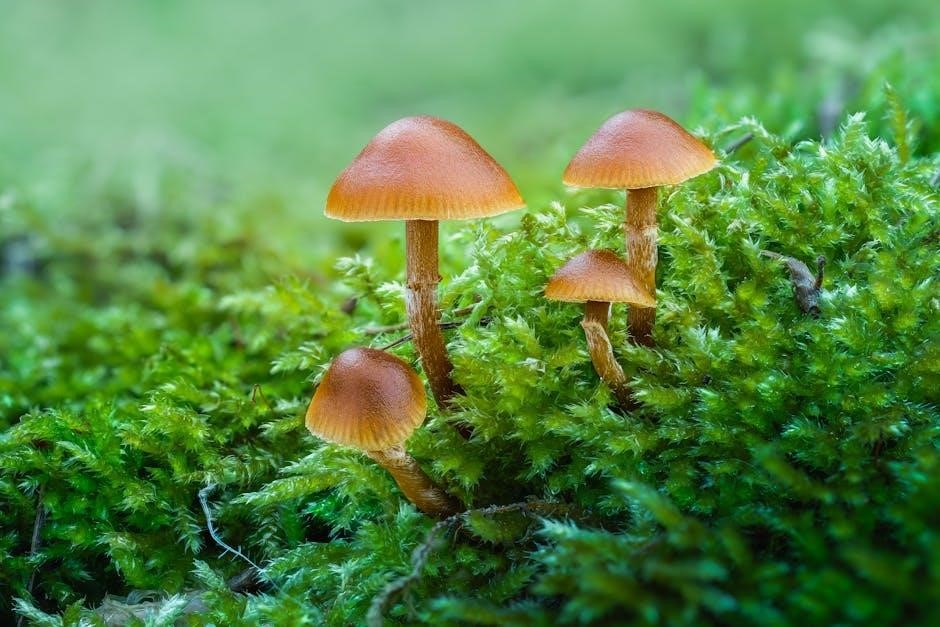
The stalk is white, smooth, and may exhibit a faint ring or remnants of a partial veil. Absence of pink or reddish tones is vital; similar edible species may blush pink when bruised. Always examine the entire mushroom, including the base, for the telltale volva.
Similar Looking Edible Mushrooms
Several edible mushrooms can be mistaken for the Destroying Angel, posing a significant risk to inexperienced foragers. Young Volvariella volvacea (paddy straw mushrooms) share a similar white coloration and volva, but possess different gill attachment and spore print characteristics.
Certain white varieties of Agaricus, like the field mushroom, might initially resemble Amanita virosa. However, Agaricus species typically have pinkish gills and a distinct almond-like odor when sliced. Always confirm identification with multiple features and a spore print before consumption, avoiding any mushroom with a volva if unsure.
Galerina marginata
Galerina marginata, commonly known as the Deadly Galerina, is a small, brown mushroom containing amatoxins – the same toxins found in the Death Cap. It frequently grows on decaying wood, particularly conifers, throughout Colorado’s forests, making it a potential hazard for foragers seeking other woodland species.
Identification is crucial; it features a brown cap, a ring on the stalk (often fragile and disappearing), and rusty-brown spores. Mistaking it for edible Kuehneromyces mutabilis (Sheathed Woodtuft) is a common and deadly error. Always exercise extreme caution and avoid consuming any small, brown mushroom with a ring.
Galerina Identification & Danger
Identifying Galerina marginata requires meticulous attention. Look for a small, brownish cap (1-3cm), often hygrophanous – meaning it changes color with moisture. The gills are attached and brownish, while the stalk is slender and typically exhibits a fragile, often disappearing ring. A rusty-brown spore print is definitive.
The danger lies in its amatoxins, potent liver toxins. Even a small amount can cause severe illness or death. Symptoms may be delayed for 6-24 hours, making treatment difficult. Never consume a mushroom unless 100% certain of its identification; when in doubt, throw it out!
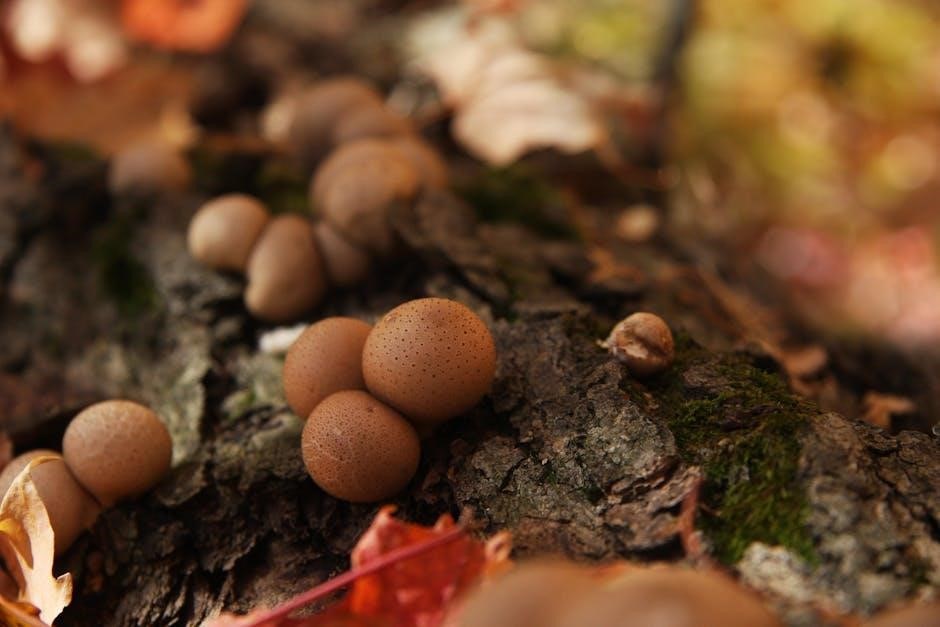
Medicinal Mushrooms of Colorado
Colorado’s forests harbor mushrooms with long-standing traditional medicinal uses, like Reishi and Turkey Tail, valued for immune support and overall wellness.
Reishi (Ganoderma lucidum)
Reishi, scientifically known as Ganoderma lucidum, is a highly prized medicinal mushroom found in Colorado’s forested regions. Characterized by its kidney-shaped, reddish-brown cap and varnished appearance, Reishi typically grows on hardwood trees. Historically, it’s been a cornerstone of traditional Eastern medicine for centuries.
Traditional uses encompass boosting the immune system, reducing stress, improving sleep, and offering potential anti-cancer properties. While research continues to validate these claims, Reishi remains a popular supplement. Identifying Reishi requires careful attention, as similar-looking, non-medicinal fungi exist. It’s often found growing at the base of trees or on decaying wood, and its tough texture distinguishes it.
Reishi Identification & Traditional Uses
Identifying Ganoderma lucidum, or Reishi, involves noting its distinctive features: a kidney-shaped cap, often reddish-brown and glossy, growing on hardwood trees. The underside reveals pores, not gills, and the mushroom possesses a tough, woody texture. Look for specimens at tree bases or decaying wood.
Traditionally, Reishi has been revered in Eastern medicine for millennia. It’s believed to enhance immune function, promote relaxation, and improve overall well-being. Ancient texts detail its use for longevity and spiritual potency. Modern research explores its potential anti-cancer and anti-inflammatory effects, though further studies are needed.
Turkey Tail (Trametes versicolor)
Trametes versicolor, commonly known as Turkey Tail, is easily recognized by its vibrant, concentric bands of color – resembling a turkey’s tail feathers. This polypore mushroom grows on decaying hardwood logs and stumps throughout Colorado’s forests. It’s a widespread and frequently encountered species, often found in overlapping clusters.
Traditionally used for its immune-boosting properties, Turkey Tail contains polysaccharides like PSP and PSK. These compounds are believed to stimulate the immune system and potentially aid in cancer treatment. Modern research supports these traditional uses, highlighting its potential benefits for gut health and overall wellness.
Turkey Tail Identification & Benefits
Turkey Tail (Trametes versicolor) is identified by its fan-shaped, multi-colored caps, displaying zones of brown, tan, and cream. The underside features tiny pores, not gills, and lacks a stem. It grows on dead hardwood, often in overlapping formations. Look for it in Colorado’s forested areas after rainfall.
Beyond identification, Turkey Tail boasts significant health benefits. Traditionally used to boost immunity, modern research confirms its polysaccharide content (PSP & PSK) supports immune function. It’s also linked to improved gut health and potential anti-cancer properties, making it a valuable medicinal mushroom.
Resources for Colorado Mushroom Hunters
Connect with local mycological societies, explore online forums, and utilize recommended field guides to enhance your knowledge and safely enjoy Colorado’s fungi!
Local Mycological Societies
Joining a Colorado mycological society is an excellent way to deepen your understanding of fungi and connect with fellow enthusiasts. These groups frequently organize forays – guided mushroom hunting expeditions – providing invaluable learning experiences in the field. Members share knowledge about identification, ecology, and ethical harvesting practices.
Societies also host workshops, lectures, and presentations by experts, covering topics ranging from mushroom cultivation to the latest research in mycology. Participating in these activities fosters a sense of community and promotes responsible mushroom hunting. Regularly checking their websites for event schedules and membership details is highly recommended for both beginners and experienced mycologists seeking to expand their expertise within Colorado’s unique ecosystems.
Online Forums & Communities
Numerous online platforms cater to Colorado mushroom hunters, offering a space to share finds, ask questions, and learn from others. These digital communities are invaluable resources for identification assistance, particularly when encountering unfamiliar species. Posting clear photos and detailed descriptions is crucial for accurate feedback from experienced members.
However, always exercise caution and cross-reference information with reliable field guides before consuming any wild mushroom. Online forums can also provide updates on recent sightings, fruiting conditions, and potential hazards in specific areas. Responsible participation, respectful communication, and a commitment to safety are essential within these vibrant online ecosystems.
Recommended Field Guides
For Colorado mushroom hunters, possessing reliable field guides is paramount for safe and accurate identification. “Mushrooms of the Rocky Mountain Region” by Vera Stévens is a highly regarded resource, specifically tailored to the region’s fungal diversity. Additionally, “All That the Rain Promises and More…” by David Arora provides comprehensive coverage of North American mushrooms, including many found in Colorado.
These guides feature detailed descriptions, photographs, and habitat information, aiding in distinguishing edible species from poisonous look-alikes. Remember that no single guide is foolproof; combining multiple resources and seeking expert advice is always recommended for responsible foraging;